li-ion lithium
2025-12-03
Lithium Ion Batteries: The Unsung Hero Powering Your Daily Life
Pause for a moment and look around—your smartphone glowing in your hand, your laptop humming on the desk, the electric scooter you rode to work, even the backup power for your home solar panels. What do all these have in common? They rely on lithium ion batteries (often shortened to Li-ion batteries)—the quiet workhorse of modern technology. But despite being everywhere, most of us don’t know how these batteries work, why they’re so essential, or how to get the most out of them. Let’s dive into the world of lithium ion batteries to unpack their science, benefits, uses, and more.

What Is a Lithium Ion Battery, Anyway?
At its heart, a lithium ion battery is a rechargeable electrochemical device that stores and releases energy by moving lithium ions between two key components: an anode (negative terminal) and a cathode (positive terminal). Unlike non-rechargeable “primary” batteries (think alkaline AA cells), Li-ion batteries can be charged and discharged hundreds of times, making them ideal for devices we use daily.
The magic lies in lithium itself: it’s the lightest metal on the periodic table and has an incredibly high ability to hold and transfer energy. This combination means lithium ion batteries can store more energy in a smaller, lighter package than older technologies like nickel-cadmium (NiCd) or lead-acid batteries— a game-changer for portable tech and electric vehicles (EVs).
A typical lithium ion battery also includes an electrolyte (a liquid or gel that helps ions flow) and a separator (a thin layer that keeps the anode and cathode from touching, preventing short circuits). Together, these parts create a cycle that powers your devices again and again.
How Does a Lithium Ion Battery Work?
The process is simpler than you might think—just a repeated dance of lithium ions between the anode and cathode, driven by charging and discharging:
1. When Charging
Plug your phone or laptop into a power source, and the charger sends an electric current into the battery. This current pushes lithium ions from the cathode (usually made of materials like lithium cobalt oxide, lithium manganese oxide, or lithium nickel manganese cobalt oxide) through the electrolyte and into the anode (most often made of graphite, a form of carbon). The anode acts like a “storage tank,” holding onto the lithium ions until the battery is full.
You’ll know charging is done when the anode can’t hold any more ions—your device will alert you, and the charger will stop sending current to avoid overcharging.
2. When Discharging (In Use)
When you turn on your device (say, to send a text or stream a video), the battery starts discharging. The lithium ions stored in the anode flow back through the electrolyte and into the cathode. As the ions move, they create an electric current that powers your device’s screen, processor, and other components.
This cycle repeats every time you charge and use your device. Over months and years, the anode and cathode slowly wear out—they can’t hold as many lithium ions as before, which is why your phone’s battery life gets shorter over time.
Why Lithium Ion Batteries Rule Modern Tech
Lithium ion batteries didn’t become ubiquitous by accident—they offer advantages that older battery technologies simply can’t match:
1. High Energy Density
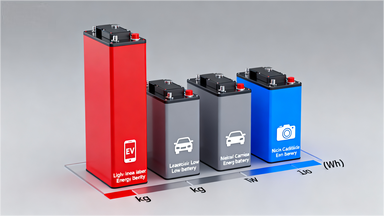
Energy density (how much energy a battery stores per unit of weight or size) is Li-ion’s superpower. A small lithium ion battery can power a smartphone for 8–12 hours, while a larger one can drive an EV 200–400 miles on a single charge. Compare that to lead-acid batteries (used in old cars): a lead-acid battery with the same energy as a Li-ion one would be twice as heavy and take up three times as much space.
This high energy density is why our devices are getting slimmer and lighter—no more bulky “brick” phones or laptops that weigh 10 pounds!

2. No Memory Effect
Older batteries like NiCd suffered from the “memory effect”: if you recharged them before they were fully discharged (e.g., charging a 50% full battery), they’d “forget” they could hold more energy, reducing their capacity over time.
Lithium ion batteries have no memory effect. You can top them up whenever you want—charge for 10 minutes on your commute, or plug in overnight—and they’ll still retain their full capacity (at least for the first few years). This flexibility makes them perfect for busy lives, where we rarely have time to wait for a full charge.
3. Low Self-Discharge
Ever left a battery-powered device in a drawer for months, only to find it dead when you need it? That’s “self-discharge”—the battery loses energy even when not in use.
Lithium ion batteries have one of the lowest self-discharge rates of any rechargeable battery: they lose only 5–10% of their charge per month. By contrast, NiCd batteries lose 20–30% per month, and lead-acid batteries lose up to 35%. This means your laptop or power bank can sit unused for weeks and still have enough juice when you need it.
4. Fast Charging Capabilities
Modern lithium ion batteries support “fast charging”—technology that can recharge a device to 50–80% capacity in 30–60 minutes. For example, a fast charger can power a smartphone from 0% to 70% in 30 minutes, or an EV from 20% to 80% in 45 minutes (with a high-speed charger).
This is a game-changer for EV drivers (no more waiting hours at charging stations) and anyone who forgets to charge their device overnight.
5. Lightweight and Compact
Since lithium is the lightest metal, Li-ion batteries are far lighter than alternatives. A typical smartphone battery weighs just 20–30 grams, while a lead-acid battery with the same energy would weigh over 100 grams. This light weight is critical for portable devices (who wants to carry a heavy tablet?) and EVs (less weight means better fuel efficiency and longer range).

Where You’ll Find Lithium Ion Batteries
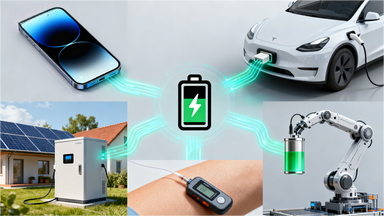
Their versatility means lithium ion batteries power nearly every corner of modern life. Here are the most common uses:
1. Consumer Electronics
This is where Li-ion batteries first became popular: smartphones, laptops, tablets, wireless headphones, smartwatches, portable gaming consoles (like the Nintendo Switch), and digital cameras. Their small size and high energy density make them perfect for these devices.
2. Electric Transportation
EVs (Tesla, Ford Mustang Mach-E, Nissan Leaf), hybrid electric vehicles (HEVs), plug-in hybrid electric vehicles (PHEVs), e-bikes, e-scooters, and even electric buses and trucks all rely on lithium ion batteries. Without Li-ion’s high energy density and light weight, EVs would be too heavy and have too short a range to compete with gas-powered cars.
3. Energy Storage
Lithium ion batteries are key to storing renewable energy (solar and wind power), which is intermittent (the sun doesn’t shine at night, wind doesn’t blow 24/7). Home solar battery systems (like the Tesla Powerwall or LG Chem RESU) store solar energy during the day to use at night, while grid-scale Li-ion batteries (the size of warehouses) balance energy supply and demand for entire cities.
They’re also used as backup power for homes, businesses, and hospitals—keeping lights on and medical equipment running during blackouts.
4. Industrial and Medical Devices
In factories, Li-ion batteries power forklifts, robots, and portable tools (like cordless drills). In healthcare, they’re used in portable medical devices: insulin pumps, pacemakers (small, long-lasting Li-ion cells), portable oxygen concentrators, and diagnostic tools (like ultrasound machines). Their reliability and long life are critical here—you can’t afford a dead battery in a life-saving device.
Safety Tips for Lithium Ion Batteries
While Li-ion batteries are generally safe, they can pose risks if misused. Here’s how to keep them (and yourself) safe:
- Use official chargers: Cheap, unbranded chargers can overcharge your battery or cause short circuits. Always use the charger that came with your device, or a certified replacement.
- Avoid extreme temperatures: Don’t leave your phone or laptop in a hot car (temperatures over 60°C/140°F can damage the battery) or in freezing cold (below -10°C/14°F, performance drops).
- Don’t overcharge or fully discharge: Most Li-ion batteries last longer if you keep them between 20% and 80% charge. Avoid leaving your device plugged in overnight (many modern devices stop charging at 100%, but it’s still better to unplug once full) and don’t let the battery die completely (0%) regularly.
- Replace damaged batteries: If your battery swells, leaks, or gets hot during use, stop using it immediately. Swollen batteries can catch fire or explode—take them to a certified recycling center, not the trash.
-
The Future of Lithium Ion Batteries
Lithium ion batteries are already amazing, but researchers are working to make them even better. Here’s what’s coming next:
- Longer Life: New anode materials (like silicon instead of graphite) could let Li-ion batteries last 2,000–3,000 charge cycles (up from 500–1,000 today), meaning your phone or EV battery could last 10+ years.
- Faster Charging: Technologies like “solid-state electrolytes” (replacing liquid electrolytes) could let EVs charge to full in 10–15 minutes—faster than filling up a gas tank.
- More Sustainability: Right now, only about 10% of Li-ion batteries are recycled. But new recycling technologies are emerging to recover lithium, cobalt, and other valuable materials, reducing reliance on mining and cutting down on e-waste.
- Lower Cost: As production scales up (especially for EVs), the cost of Li-ion batteries has dropped by 90% since 2010. Experts predict prices will keep falling, making EVs and solar storage more affordable for everyone.
Final Thoughts
Lithium ion batteries are more than just a power source—they’re the backbone of the digital age and the transition to a greener future. Without them, we wouldn’t have the portable tech we rely on, and EVs and renewable energy storage would be impractical.
By understanding how Li-ion batteries work and how to care for them, you can extend the life of your devices, save money, and use this technology more responsibly.
Do you have questions about lithium ion batteries? Maybe you’re wondering how to fix a slow-charging phone or what to look for in an EV battery? Drop a comment below—I’d love to help!
lithium battery batteries
lifepo4
Related Article

In an era where climate change urgency and energy security concerns dominate global conversations, the shift to renewable energy has moved from a "nice-to-have" to a necessity.
green mountain energy

As the global community grapples with climate change, energy security, and rising fossil fuel costs, solar energy has emerged as a beacon of hope in the transition to a cleaner, more sustainable energy system.
pros of solar energy