lifepo4 rv battery
2025-12-31
LiFePO4 RV Battery: The Ultimate Power Solution for Your Adventures
For RV enthusiasts, the freedom to explore remote destinations—whether it’s a quiet mountain campground, a coastal overlook, or a secluded forest spot—relies heavily on a reliable power source. Your RV battery isn’t just a backup; it’s the lifeline that keeps your lights on, fridge cold, appliances running, and devices charged, turning your home on wheels into a comfortable haven. In recent years, lithium iron phosphate (LiFePO4) RV batteries have emerged as a game-changer, outperforming traditional lead-acid batteries in almost every key category. If you’re tired of short battery life, heavyweight power sources, or anxiety about running out of juice mid-adventure, this blog will break down why LiFePO4 RV batteries are the ideal upgrade for your next journey.
Why LiFePO4 Batteries Are a Game-Changer for RVs
Traditional lead-acid batteries have long been the standard for RVs, but they come with significant drawbacks that clash with the needs of modern campers—short lifespans, heavy weight, limited cycle life, and poor performance in extreme temperatures. LiFePO4 batteries, by contrast, are engineered to solve these pain points, making them perfectly suited for the demands of RV travel. Let’s dive into their standout advantages:
1. Exceptional Longevity & Cycle Life
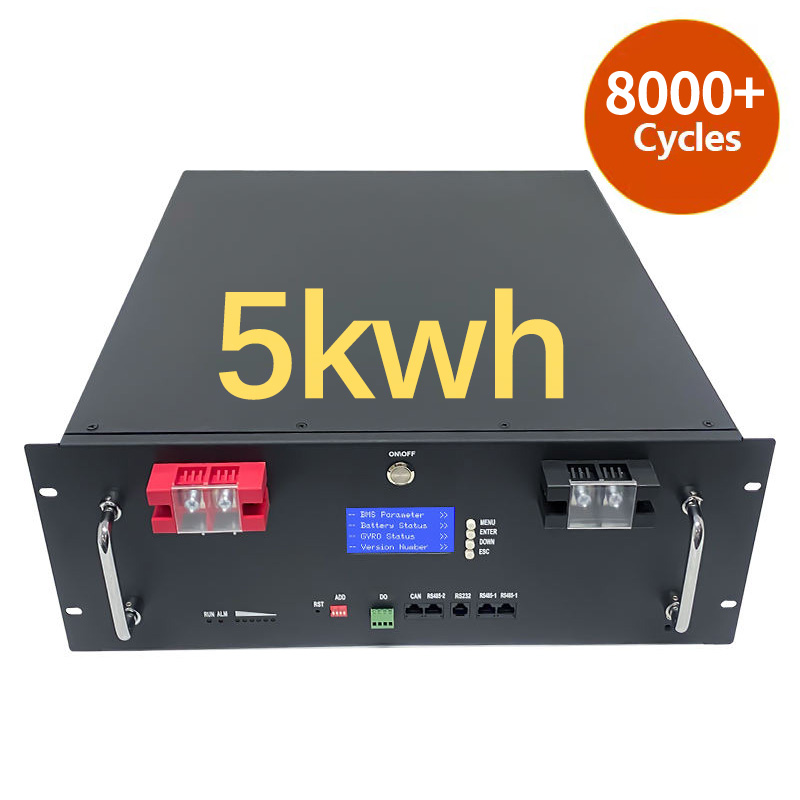
One of the most compelling benefits of LiFePO4 RV batteries is their impressive cycle life. A cycle refers to one full charge and discharge cycle (from 100% to 0% capacity). While a high-quality lead-acid battery typically lasts 300-500 cycles before its capacity drops to 80% (its “end of useful life”), LiFePO4 batteries can endure 2,000-5,000+ cycles under the same conditions. For RV owners who camp frequently—say, 20-30 times a year—this translates to a lifespan of 7-25 years for a LiFePO4 battery, compared to just 2-5 years for lead-acid. This longevity means fewer replacements over time, saving you money and reducing environmental waste.
2. Lightweight Design for Better RV Efficiency
RVs have strict weight limits, and every pound counts—especially when it comes to towing or fuel efficiency. LiFePO4 batteries are significantly lighter than lead-acid equivalents: a 100Ah LiFePO4 battery weighs around 28-33 pounds, while a lead-acid battery of the same capacity tips the scales at 60-70 pounds. For RVs that use multiple batteries (common for off-grid camping), this weight savings adds up quickly—cutting 60-80 pounds or more from your RV’s total weight. Less weight means better gas mileage, easier towing, and reduced wear and tear on your vehicle’s engine and suspension.
3. Deep Discharge Capability Without Damage
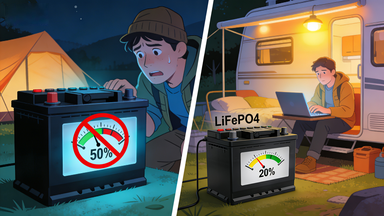
Lead-acid batteries are notoriously sensitive to deep discharge: draining them below 50% capacity can cause permanent damage, shortening their lifespan and reducing their overall capacity. This forces RV owners to monitor their power usage closely, often leaving half the battery’s potential power unused. LiFePO4 batteries, however, can safely discharge to 20% (and in some cases, 0%) without damaging the cells. This means you get access to 80% of the battery’s stored energy, compared to just 50% with lead-acid. For off-grid campers, this translates to longer stays without recharging—no more cutting your trip short because your battery is running low.
4. Superior Performance in Extreme Temperatures
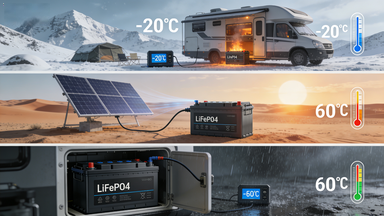
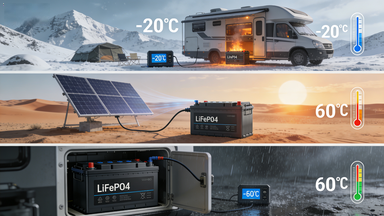
RV travel often takes you through harsh weather conditions—scorching summer heat in the desert or freezing winter cold in the mountains. Lead-acid batteries struggle in these extremes: high temperatures accelerate internal corrosion, while low temperatures (below 32°F/0°C) drastically reduce their capacity and charging efficiency. LiFePO4 batteries handle temperature fluctuations far better. They maintain stable performance in temperatures ranging from -4°F to 140°F (-20°C to 60°C), with only minimal capacity loss in cold weather. This reliability ensures your battery will power your RV’s essentials whether you’re camping in the dead of winter or the peak of summer.
5. Safe & Low Maintenance
Safety is a top priority for any RV power source, and LiFePO4 batteries excel here. Unlike lead-acid batteries (which contain toxic lead and corrosive sulfuric acid) or other lithium-ion chemistries (which can be prone to thermal runaway), LiFePO4 batteries are non-toxic, non-flammable, and highly stable. They don’t produce hydrogen gas during charging (eliminating the risk of explosion), and they require no maintenance—no watering, no cleaning of corrosion, and no checking of electrolyte levels. This low-maintenance design is a huge plus for RV owners who want to spend less time on upkeep and more time enjoying their adventures.
6. Fast Charging & Low Self-Discharge
LiFePO4 batteries charge much faster than lead-acid batteries—often reaching 80% capacity in just 1-2 hours with a compatible charger (compared to 4-6 hours for lead-acid). This is a game-changer for campers who rely on solar panels or generator charging, as it means you can top up your battery quickly even on cloudy days. Additionally, LiFePO4 batteries have an extremely low self-discharge rate (just 1-2% per month), compared to 5-10% per month for lead-acid. This means if you store your RV for months during the off-season, your battery will still hold most of its charge—no more returning to a dead battery when you’re ready to hit the road.
How LiFePO4 RV Batteries Enhance Different Camping Styles
Whether you’re a “plugged-in” camper who stays at full-hookup campgrounds or a “boondocker” who prefers off-grid adventures, LiFePO4 batteries elevate your RV experience. Here’s how they fit different camping styles:
-
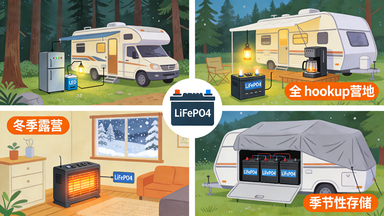
Boondocking/Off-Grid Camping: For campers who love remote spots with no electrical hookups, LiFePO4 batteries are a must-have. Their deep discharge capability, long cycle life, and compatibility with solar systems mean you can stay off-grid for days (or even weeks) without recharging. Power your fridge, air conditioner, water pump, and entertainment systems without worrying about draining your battery too quickly.
-
Full-Hookup Camping: Even if you usually camp with electrical hookups, a LiFePO4 battery is still a valuable upgrade. It acts as a reliable backup during power outages (common during storms or peak camping season) and reduces strain on the campground’s electrical system. Plus, its fast charging means you can top it up quickly when you arrive, ensuring you have power for short trips away from the campground (e.g., day hikes or sightseeing).
-
Seasonal Camping: If you keep your RV at a seasonal campground for months at a time, LiFePO4’s low self-discharge rate and maintenance-free design shine. You won’t have to check on the battery regularly or worry about it dying from inactivity, and it will be ready to go whenever you arrive for a weekend getaway.
Key Factors to Consider When Choosing a LiFePO4 RV Battery
Not all LiFePO4 RV batteries are created equal. To ensure you get the right one for your needs, here are the most important factors to consider:
1. Capacity (Ah Rating)
Capacity, measured in ampere-hours (Ah), tells you how much energy the battery can store. The right capacity depends on your power usage: if you use lots of high-draw appliances (e.g., air conditioner, microwave, electric heater), you’ll need a higher Ah rating (100Ah or more). For casual campers who use minimal power (lights, phone chargers, small fridge), a 50-75Ah battery may be sufficient. Many RV owners opt for multiple batteries (e.g., two 100Ah batteries) wired in parallel to increase capacity.
2. BMS (Battery Management System)
-
Winter Camping: As mentioned earlier, LiFePO4 batteries perform well in cold temperatures—critical for winter campers who need to power heaters, electric blankets, and other essentials. Unlike lead-acid batteries, which can lose up to 50% of their capacity in freezing weather, LiFePO4 batteries maintain most of their power, keeping you warm and comfortable.
3. Voltage Compatibility
Most RVs use 12V electrical systems, so you’ll need a 12V LiFePO4 battery. However, some larger RVs or fifth wheels may use 24V systems—be sure to check your RV’s electrical specifications before purchasing. Also, ensure the battery’s connector type matches your RV’s wiring (common types include F-1, F-2, and marine terminals).
4. Brand Reputation & Warranty
A high-quality Battery Management System (BMS) is non-negotiable for LiFePO4 batteries. The BMS monitors the battery’s voltage, current, temperature, and state of charge, protecting it from overcharging, over-discharging, short circuits, and overheating. Look for batteries with a robust BMS (preferably from reputable manufacturers) to ensure safety and longevity.
5. Physical Size & Weight
LiFePO4 batteries are an investment, so it’s worth choosing a reputable brand with positive reviews from RV owners. Look for brands that specialize in lithium batteries (e.g., Battle Born, Renogy, Victron Energy) and offer a strong warranty (3-10 years is common). A good warranty indicates the manufacturer stands behind their product and covers defects in materials or workmanship.
Maintenance Tips to Maximize Your LiFePO4 RV Battery’s Lifespan
While LiFePO4 batteries are low-maintenance, a few simple steps will help you get the most out of them:
-
Use a Compatible Charger: Always use a charger designed for LiFePO4 batteries. Lead-acid chargers deliver the wrong voltage and charging profile, which can damage the battery’s cells. Look for chargers with a LiFePO4-specific mode (many modern RV converters and solar chargers offer this).
-
Avoid Extreme Temperatures When Storing: While LiFePO4 performs well in extreme temperatures during use, long-term storage in extreme heat (above 140°F/60°C) or cold (below -4°F/-20°C) can reduce lifespan. Store the battery in a cool, dry place (50-77°F/10-25°C) when not in use.
Ensure the battery fits in your RV’s battery compartment. LiFePO4 batteries are often smaller than lead-acid batteries of the same capacity, but it’s still important to measure your compartment’s dimensions (length, width, height) before buying. Also, consider the weight—while LiFePO4 is lighter than lead-acid, multiple batteries can still add up, so check your RV’s weight limits.
lifepo4 battery 12v
24 volt lithium battery
Related Article

In an era where climate change urgency and energy security concerns dominate global conversations, the shift to renewable energy has moved from a "nice-to-have" to a necessity.
green mountain energy
As the global community grapples with climate change, energy security, and rising fossil fuel costs, solar energy has emerged as a beacon of hope in the transition to a cleaner, more sustainable energy system.
pros of solar energy