lithium golf cart batteries
2025-12-12
Lithium Golf Cart Batteries: The Game-Changer for Your Rounds (and Your Budget)
If you’re a golfer or manage a golf course, you know the drill: Your golf cart sputters mid-round, the battery dies after a few uses, or you’re stuck hauling heavy lead-acid batteries for replacement. For years, lead-acid batteries have been the default for golf carts—but they’re a relic. Enter lithium golf cart batteries: the lightweight, long-lasting, low-maintenance upgrade that’s transforming how we move on the course.
Whether you’re a weekend golfer tired of battery headaches or a course owner looking to cut costs, this blog breaks down everything you need to know about lithium golf cart batteries—why they’re better, how they work, and if they’re worth the investment.


First: Why Ditch Lead-Acid? The Case for Lithium Golf Cart Batteries
Let’s start with the elephant in the cart: Traditional lead-acid batteries are holding you back. Here’s their biggest flaws—flaws lithium batteries fix entirely:
- Weight: A single lead-acid golf cart battery weighs 40–60 lbs; a lithium equivalent? 15–30 lbs. Multiply that by 4–6 batteries per cart, and you’re hauling 200+ lbs of dead weight—slowing your cart, burning more energy, and making maintenance a back-breaking chore.
- Lifespan: Lead-acid batteries last 3–5 years (or 500–800 charge cycles) if you’re lucky. Miss a charge or let them sit unused? They sulfate (crystallize) and die early.
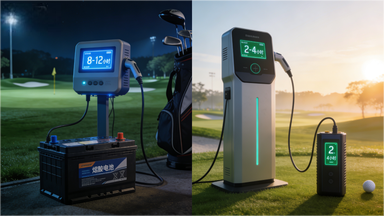
- Charging Time: Lead-acid batteries take 8–12 hours to fully charge. Need a quick top-up between rounds? Forget it—they’ll only accept a slow charge.
- Maintenance: They require regular water refills, cleaning of corrosion, and full discharges to avoid "memory effect." Skip a step, and your battery fails.
Lithium golf cart batteries eliminate all these pain points. But what exactly are they, and how do they tailor to golf cart use?
What Are Lithium Golf Cart Batteries, Anyway?
A lithium golf cart battery is a rechargeable power source designed specifically for the demands of golf carts—short bursts of power (accelerating up hills), long idle periods (waiting at tee boxes), and frequent charging cycles. Unlike generic lithium batteries, they’re engineered to:
- Match golf cart voltage requirements (36V or 48V, the standard for most carts).
- Withstand outdoor conditions (heat, humidity, occasional bumps from rough terrain).
- Deliver consistent power throughout the discharge (no fading speed mid-round).
Their core design is similar to other lithium-ion batteries (like those in EVs or laptops) but optimized for golf carts:
- Chemistry: Most use LiFePO4 (lithium iron phosphate)—the safest, most durable lithium chemistry. It’s resistant to overheating, doesn’t catch fire if damaged, and handles deep discharges (using 80–100% of capacity) without harm.
- Structure: Compact, sealed, and maintenance-free (no liquid electrolyte to spill or refill). Many are "drop-in replacements," meaning they fit into your existing lead-acid battery compartment—no wiring modifications needed.
-
6 Unbeatable Benefits of Lithium Golf Cart Batteries
For golfers and course managers, lithium batteries aren’t just an upgrade—they’re a smart investment. Here’s why:
1. Lightweight = Faster, More Efficient Carts
Lithium batteries cut your cart’s weight by 50–70%. A typical 48V lead-acid setup weighs 200–300 lbs; lithium drops that to 80–150 lbs. Less weight means:
- Faster acceleration (no dragging heavy batteries up hills).
- Longer range per charge (your cart’s motor doesn’t work as hard).
- Easier maintenance (no straining to lift dead batteries).
2. 3x Longer Lifespan = Less Replacement Cost
A quality lithium golf cart battery lasts 10–15 years or 2,000–5,000 charge cycles—compared to 3–5 years for lead-acid. For a course with 50 carts, that means replacing batteries 3x less often. Over a decade, that’s tens of thousands in savings.
3. Fast Charging = Minimal Downtime
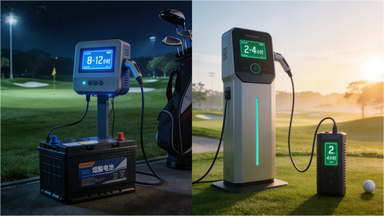
Forget waiting overnight: Lithium batteries charge 3–4x faster than lead-acid. A 48V lithium battery can go from 0–100% in 2–4 hours. For courses, this means:
- Carts are ready for morning rounds even if charged late.
- No need to stock extra batteries (fewer storage costs).
- Happy golfers (no waiting for a charged cart).
4. Maintenance-Free = More Time Golfing, Less Time Fixing
Lithium batteries are sealed, so there’s no:
- Water refilling (lead-acid needs monthly top-ups to prevent damage).
- Corrosion cleaning (lead-acid terminals rust and need scrubbing).
- Full discharges (you can charge them anytime—no "memory effect").
For a weekend golfer, that means more time on the course. For a course manager, it means less labor cost and fewer cart breakdowns.
5. Consistent Power = Smoother Rounds
Lead-acid batteries lose power as they discharge—your cart slows down by the 18th hole. Lithium batteries deliver steady voltage from 100% to 0% charge. You’ll get the same speed and performance on the first tee as you do on the last green.
6. Better for the Environment (and Your Brand)
Lithium batteries are:
- Reusable (95% of materials can be recycled).
- Lead-free (lead-acid batteries leak toxic lead and acid into landfills).
- Energy-efficient (they waste less power during charging than lead-acid).
For courses, this is a win for sustainability—something modern golfers (especially younger ones) care about. It’s a simple way to reduce your carbon footprint and market your course as eco-friendly.

Who Should Upgrade to Lithium Golf Cart Batteries?
1. Golf Course Operators
If you’re tired of:
- High battery replacement costs (lead-acid batteries cost \(500–\)800 per cart, and you need to replace them every 3 years).
- Labor hours spent maintaining batteries (watering, cleaning, lifting).
- Cart downtime (dead batteries ruining golfers’ experiences).
Lithium batteries pay for themselves in 2–3 years (via reduced replacement and labor costs) and last 10+ years after that.
2. Private Golf Cart Owners
If you use your cart for:
- Weekend rounds (you want reliability and no maintenance).
- Off-course use (hauling gear, running errands around your neighborhood).
- Long trips (camping, RVing—lithium’s long range is a game-changer).
Lithium is worth the upfront cost (more on that below) for the convenience and longevity.
3. Golf Cart Rental Companies
Rental carts get abused—frequent charging, rough handling, and inconsistent use. Lithium batteries handle this better than lead-acid, so you’ll have fewer breakdowns and happier renters.
Key Considerations When Buying Lithium Golf Cart Batteries
Not all lithium golf cart batteries are created equal. Here’s what to look for:
1. Voltage & Capacity
- Voltage: Match your cart’s voltage (36V or 48V—check your owner’s manual).
- Capacity: Measured in Ah (ampere-hours). For 18-hole rounds, 100–150 Ah is enough. For 36 holes or heavy use (hauling gear), go for 200+ Ah.
2. Drop-In vs. Custom Fit
Most lithium batteries are "drop-in"—they fit into your existing lead-acid battery tray. Avoid custom-fit batteries unless your cart has a unique design (they’re more expensive and harder to replace).
3. Brand Reputation
Stick to trusted brands like:
- Battle Born Batteries (known for durability and customer service).
- Renogy (great for budget-friendly options).
- Victron Energy (premium, high-performance batteries for courses).
Avoid no-name brands—they may be cheaper upfront but fail quickly (and lack warranties).
4. Warranty
A good lithium golf cart battery should have a 5–10 year warranty (or 2,000+ charge cycles). Lead-acid batteries only have 1–2 year warranties, so this is a big advantage.
5. Price
Lithium batteries cost more upfront: \(1,000–\)2,000 per cart (vs. \(500–\)800 for lead-acid). But when you factor in lifespan (10+ years vs. 3–5), lithium is cheaper in the long run. Think of it as a 10-year investment, not a one-time cost.

Installation & Maintenance Tips for Lithium Golf Cart Batteries
Installation
- Drop-in Replacement: Most lithium batteries fit right into your existing battery compartment. Just disconnect the old lead-acid batteries, remove them, and plug in the lithium ones (match positive/negative terminals).
- BMS Compatibility: Ensure your cart’s controller works with lithium batteries. Most modern carts (2010+) are compatible, but older ones may need a controller upgrade (cost: \(200–\)500).
Maintenance
- Charge Smart: Use a lithium-specific charger (lead-acid chargers won’t work—they overcharge lithium batteries). Most lithium batteries come with a compatible charger.
- Store Properly: If you’re not using the cart for months (e.g., winter), charge the battery to 50–70% and store it in a cool, dry place.
- Avoid Deep Discharges: While LiFePO4 handles deep discharges, it’s still better to charge the battery before it hits 0% to extend lifespan.
The Future of Lithium Golf Cart Batteries
Lithium tech is evolving fast—here’s what’s coming next for golf cart batteries:
- Faster Charging: New "ultra-fast" lithium batteries will charge to 100% in 1 hour or less.
- Higher Capacity: Smaller batteries with more Ah—meaning even longer range per charge.
- Lower Costs: As production scales, lithium battery prices will drop (they’ve already fallen 80% in the last decade).
For golfers and courses, this means even more affordable, efficient power in the years ahead.

Final Thoughts: Lithium Golf Cart Batteries = Better Golf, Lower Costs
Lead-acid batteries were fine for the 1990s, but today’s golfers demand reliability, speed, and convenience—all things lithium delivers. Whether you’re a course manager looking to cut costs or a private owner tired of battery headaches, lithium golf cart batteries are the clear upgrade.
Yes, the upfront cost is higher—but the 10+ year lifespan, zero maintenance, and smoother rounds make it worth every penny. Think of it this way: A lithium battery will outlast 3 sets of lead-acid batteries, save you hours of work, and make every round more enjoyable.
Have questions? Want help choosing the right lithium battery for your cart? Drop a comment below—I’m happy to share more tips! Or if you’ve already made the switch, tell us about your experience—we’d love to hear how lithium transformed your golf cart.
what is a lithium ion battery
what is lithium used for
Related Article

In an era where climate change urgency and energy security concerns dominate global conversations, the shift to renewable energy has moved from a "nice-to-have" to a necessity.
green mountain energy

As the global community grapples with climate change, energy security, and rising fossil fuel costs, solar energy has emerged as a beacon of hope in the transition to a cleaner, more sustainable energy system.
pros of solar energy