lithium rv battery
2025-12-15
Lithium RV Batteries: The Game-Changer for Your Next Camping Adventure
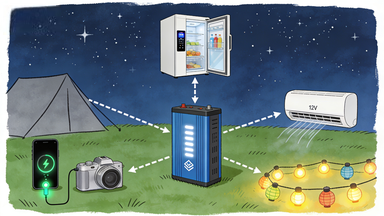
Imagine this: You’re boondocking in a remote mountain valley, sunset painting the sky orange. You want to run your RV’s fridge, charge your phone, and power a string of fairy lights for dinner— but your battery dies halfway through the night. Sound familiar? For years, RVers relied on clunky, short-lived lead-acid batteries that limited their adventures. But today, lithium RV batteries are revolutionizing how we power our rigs. They’re lighter, more powerful, and longer-lasting—so you can camp off-grid longer, with less stress. Let’s dive into everything you need to know about lithium RV batteries.


First: What Is a Lithium RV Battery?
A lithium RV battery is a rechargeable power storage device designed specifically for recreational vehicles (RVs), using lithium-ion technology (most commonly lithium iron phosphate, or LiFePO4) to store and deliver electricity. Unlike traditional lead-acid batteries (the standard in RVs for decades), lithium RV batteries leverage lithium’s high energy density and low weight to solve the unique challenges of RV life—like limited space, weight constraints, and the need for reliable off-grid power.
At its core, a lithium RV battery works the same way as other lithium-ion batteries (think your phone or laptop), but scaled up for RV use: Lithium ions flow between an anode and cathode during charging/discharging, creating an electric current that powers your RV’s appliances, lights, water pump, and more. The key difference? Lithium RV batteries are built to handle the demands of RV travel—vibration from the road, extreme temperatures, and frequent deep discharges—while outperforming lead-acid batteries in nearly every category.
Why Lithium RV Batteries Beat Traditional Lead-Acid Batteries (Hands Down)
If you’re still using lead-acid batteries in your RV, here’s why upgrading to lithium will transform your camping experience. Let’s compare the two side by side:
|
Feature
|
Lithium RV Battery
|
Lead-Acid Battery
|
|
Weight
|
50-60% lighter (e.g., a 100Ah lithium battery weighs ~30 lbs vs. 60-70 lbs for lead-acid)
|
Heavy—adds significant bulk to your RV
|
|
Lifespan
|
3,000-10,000 charge cycles (lasts 5-10 years)
|
300-500 charge cycles (lasts 1-3 years)
|
|
Depth of Discharge (DoD)
|
Can safely discharge to 80-100% (use nearly all stored power)
|
Only 50% DoD (discharging more damages the battery)
|
|
Charging Speed
|
Charges 2-3x faster (full charge in 2-4 hours with a compatible charger)
|
Slow (full charge takes 8-12 hours)
|
|
Maintenance
|
Virtually maintenance-free (no water top-ups, no corrosion)
|
High maintenance (needs water checks, terminal cleaning)
|
|
Performance in Temperatures
|
Works well in extreme heat/cold (-20°F to 140°F)
|
Struggles in cold weather (loses 30-50% capacity below freezing)
|
|
Vibration Resistance
|
Built to handle RV road vibration (no internal damage)
|
Fragile—vibration can crack plates and shorten life
|
The Biggest Win for RVers: More Off-Grid Time
Let’s do the math to see why this matters. A 100Ah lead-acid battery only gives you 50Ah of usable power (since you can’t discharge below 50%). A 100Ah lithium RV battery gives you 80-100Ah of usable power—that’s double the runtime! For boondockers, this means:
- Running your RV fridge for 3-5 days (vs. 1-2 days with lead-acid)
- Powering a 12V air conditioner for 8+ hours (instead of 3-4)
- Charging your laptop, cameras, and phones multiple times without plugging in
No more rushing to hook up to shore power or firing up a noisy generator—lithium RV batteries let you stay off-grid longer, in more remote places.

The Best Type of Lithium RV Battery: LiFePO4 (Lithium Iron Phosphate)
Not all lithium batteries are created equal—for RVs, LiFePO4 (lithium iron phosphate) is the gold standard. Here’s why:
- Safety: LiFePO4 batteries are extremely stable. They won’t overheat, catch fire, or explode—even if punctured or short-circuited (a critical feature for bumpy RV rides).
- Longevity: They last 3,000-10,000 charge cycles (compared to 1,000 cycles for standard Li-Ion batteries). That means a LiFePO4 RV battery can power your adventures for a decade or more.
- Wide Temperature Range: They perform reliably in hot deserts (up to 140°F) and cold mountains (down to -20°F)—unlike lead-acid batteries, which die in freezing temps.
- No Toxic Materials: LiFePO4 batteries are non-toxic (no lead or acid), making them better for the environment and safer to handle.
Avoid cheaper lithium cobalt oxide (LiCoO2) batteries for RVs—they’re less stable and don’t hold up to deep discharges or vibration. Stick with LiFePO4 for peace of mind.
How to Choose the Right Lithium RV Battery for Your Rig
When shopping for a lithium RV battery, focus on these 5 key factors:
1. Capacity (Ah = Ampere-Hours)
Capacity measures how much power the battery stores. For RVs, common sizes are 100Ah, 200Ah, or 400Ah (you can wire multiple batteries in parallel to increase capacity).
- Casual Campers (Weekends, Shore Power): 100Ah is enough to power lights, a fridge, and small devices.
- Boondockers (3+ Days Off-Grid): 200Ah+ (or two 100Ah batteries in parallel) to run AC, microwaves, or solar panels.
- Full-Time RVers: 400Ah+ for constant power needs (e.g., running a residential fridge, washing machine, or heater).
2. Voltage (12V, 24V, or 48V)
Most RVs use 12V systems, so stick with 12V lithium batteries unless you have a high-powered rig (e.g., a Class A motorhome with a large AC unit). If you need more voltage, wire batteries in series (two 12V batteries = 24V).
3. BMS (Battery Management System)
A BMS is a built-in computer that protects the battery from overcharging, over-discharging, short-circuiting, and overheating. Never buy a lithium RV battery without a high-quality BMS—it’s the difference between a safe, long-lasting battery and a costly failure. Look for BMS with temperature monitoring (critical for RVs).
4. Compatibility with Your RV’s System
Check if the battery works with your RV’s charger, inverter, and solar panels (if you have them):
- Chargers: Most modern RV converters work with lithium batteries, but older ones may need an upgrade (look for chargers labeled "lithium-compatible" or adjustable voltage).
- Inverters: Ensure your inverter (which converts 12V DC to 120V AC) can handle the battery’s capacity (e.g., a 2000W inverter needs a battery that can deliver at least 200A).
- Solar Panels: Lithium batteries charge efficiently with solar—no extra equipment needed (unlike lead-acid, which requires a solar charge controller).
5. Brand and Warranty
Stick with reputable brands like Battle Born Batteries, Victron Energy, Renogy, or Ampere Time—they offer 5-10 year warranties (vs. 1-2 years for cheap brands). A good warranty means the company stands behind their product.

Installing and Maintaining Your Lithium RV Battery
Lithium RV batteries are easy to install and maintain—here’s what you need to know:
Installation Tips
- Weight Distribution: Since lithium batteries are lighter, you can mount them in more places (e.g., under seats, in storage compartments) without adding stress to your RV’s frame. Just ensure the area is well-ventilated (though LiFePO4 batteries don’t emit gas like lead-acid).
- Wiring: Use heavy-gauge wires (4AWG or larger) to handle the battery’s high current. Tighten terminals securely to avoid vibration damage.
- Disconnect Old Batteries First: When replacing lead-acid batteries, disconnect the RV’s power (negative terminal first) to avoid short-circuits.
Maintenance (It’s Almost None!)
- No Water Needed: Unlike lead-acid batteries, lithium RV batteries are sealed—no topping up with distilled water.
- Clean Terminals Occasionally: Wipe down terminals with a dry cloth to remove dust (corrosion is rare with lithium).
- Store Properly: If storing your RV for months, charge the battery to 50-70% and disconnect it (the BMS will prevent self-discharge, but disconnecting adds extra protection).
- Avoid Extreme Temperatures (When Possible): While LiFePO4 works in cold/hot weather, storing it in a climate-controlled area (e.g., a garage) will extend its lifespan.
Common Myths About Lithium RV Batteries (Debunked)
Let’s clear up the most common misconceptions:
Myth 1: "They’re Too Expensive"
Yes, lithium RV batteries cost more upfront (a 100Ah LiFePO4 battery is ~\(500-\)800 vs. \(150-\)200 for lead-acid). But over time, they’re cheaper: A lithium battery lasts 5-10 years, while you’ll replace lead-acid batteries 3-4 times in the same period. Plus, you get more usable power—so you won’t need to buy extra batteries.
Myth 2: "They’re Dangerous"
LiFePO4 batteries are safer than lead-acid. They don’t leak toxic acid, don’t emit explosive gas, and won’t catch fire if damaged. The BMS adds an extra layer of protection against overcharging.
Myth 3: "You Need a Special Charger"
Most modern RV chargers (made after 2015) work with lithium batteries. If you have an older charger, you can either upgrade it (cost: ~\(100-\)200) or use a lithium-compatible charge controller.
Myth 4: "They Don’t Work with Solar Panels"
False—lithium batteries are perfect for solar. They charge faster and more efficiently than lead-acid, so you’ll get more power from your solar setup.
Real-World Testimonial: How Lithium RV Batteries Changed My Camping
I’ve been full-time RVing for 3 years, and upgrading to a 200Ah LiFePO4 battery was the best decision I ever made. Before, I could only boondock for 1-2 days—my lead-acid battery died when I ran the fridge and AC. Now, I’ve stayed off-grid for 7 days straight, powering my fridge, 12V AC, laptop, and even a coffee maker. No generator noise, no rushing to find shore power—just pure camping bliss. And since the battery is 40 lbs lighter than my old lead-acid setup, my RV’s gas mileage improved too!

Final Thoughts: Is a Lithium RV Battery Worth It?
If you love camping—especially off-grid—yes, 100%. Lithium RV batteries are an investment that pays off in longer adventures, less maintenance, and more peace of mind. They’re not just a "nice-to-have"—they’re a game-changer that lets you explore farther and stay longer in the places you love.
Do you have questions about upgrading to lithium? Want to know which battery size is right for your RV, or how to wire multiple batteries? Drop a comment below—I’d love to help you power your next adventure!
solar batteries
lithium rv batteries
Related Article

In an era where climate change urgency and energy security concerns dominate global conversations, the shift to renewable energy has moved from a "nice-to-have" to a necessity.
green mountain energy

As the global community grapples with climate change, energy security, and rising fossil fuel costs, solar energy has emerged as a beacon of hope in the transition to a cleaner, more sustainable energy system.
pros of solar energy