what is a lithium batteries
2025-12-08
What Is a Lithium Battery? Your Go-To Guide to the Tech Powering Modern Life
Chances are, you’re interacting with a lithium battery right now—whether you’re scrolling this on your phone, typing on a laptop, or sipping coffee next to a wireless speaker. These tiny (or not-so-tiny) power sources have become so ubiquitous that we rarely stop to ask: What is a lithium battery, exactly? And why is it the top choice for everything from our smartwatches to electric cars? Let’s demystify this essential technology with simple explanations and everyday examples.

Let’s Start with the Basics: What Is a Lithium Battery?
At its simplest, a lithium battery is a type of rechargeable (or sometimes single-use) energy storage device that uses lithium ions to generate electricity. Unlike traditional batteries (think the bulky lead-acid ones in old cars or disposable alkaline batteries), lithium batteries rely on lithium—a super-light, highly reactive metal—to store and release energy efficiently.
The key to its popularity? Lithium’s unique chemistry: it can hold more energy per unit of weight or size (called "energy density") than almost any other battery material. To put it in perspective: a lithium battery the size of a AA battery can power your phone for hours, while a lead-acid battery of the same size would barely run a flashlight for 10 minutes.
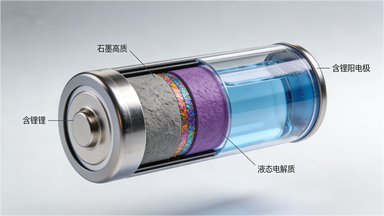
Every lithium battery has three core components that make it work:
- Anode: The "negative" side, usually made of graphite (yes, the same material in pencils!), which soaks up lithium ions when charging.
- Cathode: The "positive" side, made of materials like lithium cobalt oxide or iron phosphate, which releases ions when the battery is in use.
- Electrolyte: A conductive liquid or gel that acts as a "highway" for lithium ions to move between the anode and cathode—without this, no electricity flows!
-
How Does a Lithium Battery Work? (No Chemistry Degree Required)
You don’t need to be a scientist to grasp the basics. Let’s use a simple analogy: think of a lithium battery as a playground slide for ions.
When You Charge It (e.g., Plugging in Your Laptop)
- The charger sends an electric current into the battery, pushing lithium ions from the cathode (top of the slide) down through the electrolyte (the slide itself) to the anode (the bottom of the slide).
- The anode "catches" these ions and holds onto them—like kids waiting at the bottom of the slide.
- Once the anode is full of ions, the battery is charged and ready to use.
When You Use It (e.g., Streaming a Movie)
- As your device needs power, the lithium ions zip back up the slide (electrolyte) from the anode to the cathode.
- This movement of ions creates an electric current that flows through a wire to power your laptop, phone, or EV.
- When all the ions are back at the cathode, the battery is drained—and it’s time to plug it in again.
-
Why Do Batteries "Die" Over Time?
Each charge-discharge cycle (ions sliding back and forth) wears down the anode and cathode a little. Over months or years, these components can’t hold as many ions as they used to—so your battery’s "capacity" shrinks. That’s why your 3-year-old phone dies faster than a brand-new one: its lithium battery’s "slide park" isn’t as efficient anymore.
What Are the Different Types of Lithium Batteries?
Not all lithium batteries are created equal—they’re tailored to different needs. Here are the three most common types you’ll encounter:
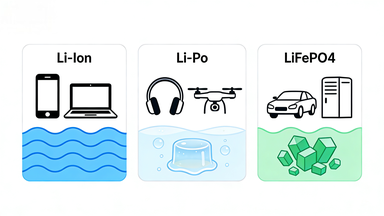
1. Lithium-Ion (Li-Ion) Batteries
- What it is: The "workhorse" of lithium batteries, with a liquid electrolyte.
- Best for: Devices that need lots of power in a small space.
- Where to find it: Smartphones, laptops, electric cars (Tesla, Hyundai Ioniq), and portable chargers.
2. Lithium-Ion Polymer (Li-Po) Batteries
- What it is: A flexible version of Li-Ion, using a gel-like electrolyte instead of liquid.
- Best for: Thin, odd-shaped devices (since they can be molded into any form).
- Where to find it: Wireless earbuds (AirPods), smartwatches (Apple Watch), foldable phones, and drones.
3. Lithium Iron Phosphate (LiFePO4) Batteries
- What it is: The "tough, safe" option, with iron phosphate in the cathode.
- Best for: High-demand, long-lasting use (no overheating risks!).
- Where to find it: Electric buses, solar home storage (Tesla Powerwall), power tools, and budget EVs (BYD Dolphin).
-
Why Lithium Batteries Beat All the Rest
Before lithium batteries became mainstream, we relied on nickel-cadmium (NiCd) or lead-acid batteries—both of which had major flaws. Here’s why lithium took over:
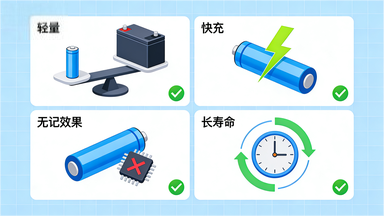
- Lightweight: A lithium battery weighs 50-70% less than a lead-acid battery of the same capacity (hello, slim phones and portable laptops!).
- Fast Charging: Most modern lithium batteries can charge to 80% in 30-60 minutes (no more waiting 4 hours for your phone to power up).
- No "Memory Effect": Unlike NiCd batteries, you don’t have to drain lithium batteries fully before charging—top them up whenever you want!
- Long-Lasting: A good lithium battery can last 500-1,000 charge cycles (that’s 2-3 years of daily use for a phone).
Common Myths About Lithium Batteries (Busted!)
Let’s clear up some misconceptions that often come with the question "what is a lithium battery":
Myth 1: "You need to charge lithium batteries to 100% every time."
- Fact: Charging to 100% regularly can shorten battery life. Most experts recommend keeping it between 20-80% for daily use (your phone’s "battery optimization" setting does this automatically!).
Myth 2: "Lithium batteries are dangerous and explode easily."
- Fact: Modern lithium batteries have safety features (like voltage regulators) to prevent overheating. Explosions are rare and almost always caused by cheap, uncertified batteries (never buy knockoff chargers or batteries!).
Myth 3: "Storing a lithium battery empty is better for it."
- Fact: Storing a battery at 0% can permanently damage it. The sweet spot is 40-60% charge if you’re not using it for weeks (e.g., a spare phone or laptop).
The Future of Lithium Batteries
As we ask "what is a lithium battery" more, we’re also pushing the tech forward. Scientists are working on:
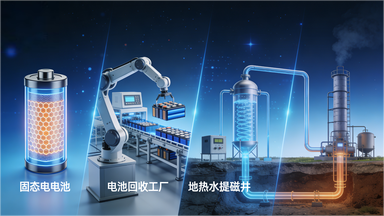
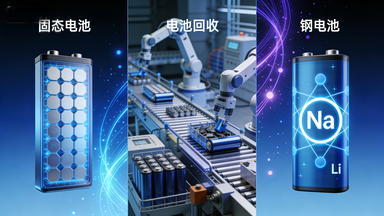
- Solid-State Lithium Batteries: These replace the liquid electrolyte with a solid material, making batteries safer, faster-charging, and longer-lasting (they could double EV range by 2030!).
- Recyclable Lithium Batteries: New processes can now recover 95% of lithium, cobalt, and nickel from old batteries—turning your discarded phone battery into a new EV battery.
- Sodium-Ion Alternatives: For large-scale storage (like grid power), sodium-ion batteries (using abundant sodium instead of lithium) are emerging as a cheaper, more sustainable option.
-
Wrapping Up: Why Lithium Batteries Matter
At the end of the day, a lithium battery is more than just a power source—it’s the reason we can work remotely, drive emission-free cars, and stay connected on the go. Understanding "what is a lithium battery" helps us use our devices smarter (e.g., avoiding overcharging) and appreciate the innovation that makes modern life possible.
Do you have more questions? Maybe you’re wondering how to extend your laptop’s battery life, or what to do with old lithium batteries? Drop a comment below—I’d love to dive deeper!
solar battery
what is lithium
Related Article

In an era where climate change urgency and energy security concerns dominate global conversations, the shift to renewable energy has moved from a "nice-to-have" to a necessity.
green mountain energy

As the global community grapples with climate change, energy security, and rising fossil fuel costs, solar energy has emerged as a beacon of hope in the transition to a cleaner, more sustainable energy system.
pros of solar energy