what is a lithium ion battery
2025-12-13
What Is a Lithium Ion Battery? The Rechargeable Powerhouse You Use Every Day
Chances are, you’re interacting with a lithium ion battery right now—whether you’re scrolling this blog on your smartphone, typing on a laptop, or sipping coffee next to a wireless charger. These batteries have become so ubiquitous that we rarely stop to ask: What is a lithium ion battery, exactly? And why is it the go-to power source for most of our modern gadgets? Let’s dive into the science, design, and everyday impact of this game-changing technology.

First Things First: What Is a Lithium Ion Battery?
A lithium ion battery (often shortened to Li-Ion battery) is a rechargeable electrochemical device that stores and releases energy through the controlled movement of lithium ions (positively charged particles) between two electrodes. Unlike disposable lithium batteries (which can’t be recharged) or older rechargeable types (like nickel-cadmium), Li-Ion batteries rely on lithium ions as the "charge carriers"—a design that makes them lighter, more efficient, and longer-lasting than their predecessors.
At its core, every Li-Ion battery has four essential components:
- Anode (Negative Electrode): Typically made of graphite (a form of carbon), this is where lithium ions "store" themselves during charging.
- Cathode (Positive Electrode): Made of a lithium-based compound (common options include lithium cobalt oxide, lithium nickel manganese cobalt oxide, or lithium iron phosphate), this is where ions originate and return during discharge.
- Electrolyte: A liquid or gel-like substance (usually containing lithium salts dissolved in an organic solvent) that allows lithium ions to flow between the anode and cathode. It blocks electrons from passing through—forcing them to travel through an external circuit (powering your device in the process).
- Separator: A thin, porous membrane that keeps the anode and cathode physically separated (preventing short circuits) while letting lithium ions pass through.
This simple yet clever design is what makes Li-Ion batteries the gold standard for rechargeable power.
How Does a Lithium Ion Battery Actually Work?
You don’t need a chemistry PhD to grasp the basics—let’s break it down into two key cycles: charging and discharging. Think of it as a "ion shuttle service" between the two electrodes.
1. Charging: Storing Energy
When you plug your phone or laptop into a charger, an external electrical current flows into the battery. This current "pushes" lithium ions from the cathode (positive side) through the electrolyte and separator, where they embed themselves into the graphite anode (negative side). The anode acts like a storage shelf—holding onto the lithium ions until the battery is fully charged.
Fun fact: The amount of lithium ions the anode can hold determines the battery’s capacity (measured in mAh for small devices or kWh for EVs). A higher capacity means more ions can be stored, so the battery lasts longer between charges.
2. Discharging: Powering Your Device
When you unplug and use your device, the stored lithium ions "want" to return to the cathode. They flow back through the electrolyte and separator, while electrons travel through the external circuit (the wires in your phone or laptop) to power the screen, processor, or motor. This flow of electrons is the electric current that keeps your device running.
3. Why Li-Ion Batteries Don’t Have a "Memory Effect"
Older rechargeable batteries (like nickel-cadmium) suffered from a "memory effect": if you didn’t drain them fully before charging, their capacity would shrink over time. Li-Ion batteries avoid this because the lithium ions don’t form permanent bonds with the anode—they can be charged or discharged partially without damaging the battery. That’s why you can top up your phone for 10 minutes and it won’t hurt long-term performance!

Key Traits That Make Li-Ion Batteries Irreplaceable
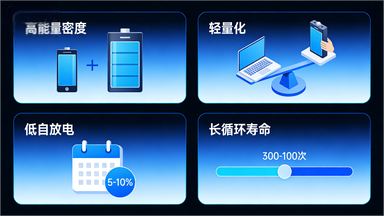
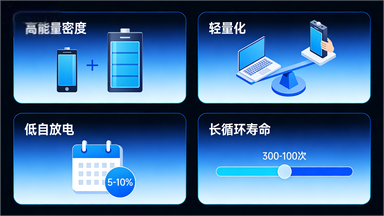
What sets Li-Ion batteries apart from other rechargeable options? These four features explain their dominance:
1. High Energy Density
Energy density refers to how much energy a battery can store relative to its size and weight. Li-Ion batteries have one of the highest energy densities of any rechargeable battery—meaning a tiny Li-Ion battery (like the one in your AirPods) can pack enough power to last hours, while a larger one (in an electric car) can drive 300+ miles on a single charge.
2. Lightweight
Lithium is the lightest metal on the periodic table, and Li-Ion batteries don’t require heavy metal plates (unlike lead-acid batteries). This makes them ideal for portable devices—imagine carrying a laptop with a lead-acid battery: it would weigh 20+ pounds!
3. Low Self-Discharge Rate
Self-discharge is the amount of energy a battery loses when not in use. Li-Ion batteries lose only 5–10% of their charge per month, compared to 20–30% for nickel-cadmium batteries. That’s why your wireless speaker can sit in a drawer for months and still have juice when you need it.
4. Long Cycle Life
A "cycle" is one full charge (from 0% to 100%) and discharge (from 100% to 0%). Most Li-Ion batteries can handle 300–1,000 cycles before their capacity drops to 80% of the original. For example, if you charge your phone once a day, a good Li-Ion battery will last 1–3 years before you notice significant degradation.

Where You’ll Find Lithium Ion Batteries (Spoiler: Everywhere!)
Li-Ion batteries are the backbone of modern technology—here are the most common places you’ll encounter them:
- Consumer Electronics: Smartphones, laptops, tablets, wireless earbuds, smartwatches, digital cameras, and portable gaming consoles (e.g., Nintendo Switch).
- Transportation: Electric vehicles (EVs like Tesla Model 3, Hyundai Ioniq 5), hybrid cars, e-bikes, e-scooters, and electric skateboards.
- Home & Energy Storage: Portable power stations (e.g., Jackery, Anker), solar panel storage systems (e.g., Tesla Powerwall), and backup batteries for homes or offices.
- Tools & Gadgets: Cordless drills, leaf blowers, portable vacuums (e.g., Dyson), and even some kitchen appliances (like wireless blenders).
- Medical Devices: Portable oxygen concentrators, nebulizers, and some wearable health monitors (though smaller devices may use Li-Po batteries, a variation of Li-Ion).
Safety & Maintenance Tips for Li-Ion Batteries
Li-Ion batteries are generally safe, but improper use can lead to overheating, swelling, or even fires. Follow these tips to keep them working (and you) safe:
- Use Official Chargers: Cheap, uncertified chargers can overvoltage the battery. Stick to the charger that came with your device or a reputable brand.
- Avoid Extreme Temperatures: Don’t leave devices in hot cars (temperatures above 140°F/60°C can damage the battery) or freezing cold (below 32°F/0°C reduces performance).
- Don’t Overcharge or Fully Drain: You don’t need to charge to 100% or drain to 0% every time—keeping the battery between 20% and 80% extends its life. Most modern devices stop charging once full, but avoid leaving them plugged in for days on end.
- Replace Swollen Batteries: If your phone, laptop, or power bank feels puffy or swollen, stop using it immediately. Swelling means the battery is damaged and could be dangerous.
- Recycle Properly: Li-Ion batteries contain toxic materials and should never be thrown in the trash. Recycle them at electronics stores (e.g., Best Buy), battery drop-off locations, or local recycling centers.
The Future of Lithium Ion Batteries
Li-Ion technology is still evolving! Researchers are working on improvements like:
- Silicon Anodes: Replacing graphite with silicon (which can store 10x more lithium ions) to boost capacity by 30–50%.
- Solid-State Electrolytes: Replacing liquid electrolytes with solid materials to make batteries safer (no risk of leakage) and faster-charging.
- Reduced Cobalt Use: Cobalt is expensive and ethically problematic to mine—new cathodes use less cobalt (or none at all) without sacrificing performance.
These innovations will make Li-Ion batteries even more powerful, affordable, and sustainable—paving the way for longer-range EVs, smaller gadgets, and more reliable renewable energy storage.

Wrapping Up: Why Li-Ion Batteries Matter
To circle back to the original question: What is a lithium ion battery? It’s a compact, rechargeable energy storage device that relies on lithium ions to power nearly every aspect of our digital and mobile lives. Its unique combination of high energy density, lightweight design, and long cycle life has made it irreplaceable—from our pockets (phones) to our roads (EVs) to our homes (solar storage).
Next time you charge your phone or drive an EV, take a moment to appreciate the Li-Ion battery working behind the scenes. And if you have questions—like how to fix a slow-charging battery or what’s next for Li-Ion tech—drop a comment below! I’d love to help.
lithium from battery
lithium golf cart batteries
Related Article

In an era where climate change urgency and energy security concerns dominate global conversations, the shift to renewable energy has moved from a "nice-to-have" to a necessity.
green mountain energy

As the global community grapples with climate change, energy security, and rising fossil fuel costs, solar energy has emerged as a beacon of hope in the transition to a cleaner, more sustainable energy system.
pros of solar energy