what is energy
2025-12-09
What Is Energy? The Invisible Force Shaping Every Moment of Your Life
You wake up at dawn, and sunlight streams through the window—warming your skin, brightening the room. You flip a switch, and your lamp glows. You brew coffee, and the water boils. You walk to work, your legs propelling you forward. You send a text, and your phone’s screen lights up. What connects all these moments? Energy. It’s everywhere, powering everything from the smallest atom to the largest galaxy—yet most of us rarely stop to ask: What is energy, exactly?
Let’s demystify this invisible, essential force—one that’s central to every breath you take, every device you use, and every natural phenomenon on Earth.

What Is Energy, At Its Most Basic?
In science, energy is defined as the capacity to do work—or, more simply, the ability to cause change. Work here doesn’t mean your 9-to-5 job; it refers to moving an object, heating something up, lighting a space, or transforming matter.
The key thing to remember: Energy isn’t a "thing" you can hold or touch. It’s a property of matter and fields, like how mass is a property of an apple or how temperature is a property of a cup of tea. You can’t see energy itself, but you can see its effects: a leaf blowing in the wind (energy moving the leaf), a fire burning (energy releasing heat and light), or a battery powering your laptop (energy enabling digital work).
Two Fundamental Forms of Energy
All energy falls into two broad categories—kinetic energy and potential energy—and they’re constantly converting into each other:
1. Kinetic Energy: Energy of Motion
Kinetic energy is the energy of an object in motion. The faster something moves, or the more mass it has, the more kinetic energy it carries.
- Examples: A speeding car, a flying bird, a rolling ball, wind (moving air molecules), or even the electrons flowing through your phone’s wires.
2. Potential Energy: Stored Energy
Potential energy is energy that’s stored, waiting to be released as kinetic energy. It comes from an object’s position, composition, or condition.
- Examples: A book sitting on a shelf (gravitational potential energy—if it falls, it converts to kinetic energy), a stretched rubber band (elastic potential energy), a charged battery (chemical potential energy), or a tank of gasoline (chemical potential energy that becomes kinetic energy when burned).
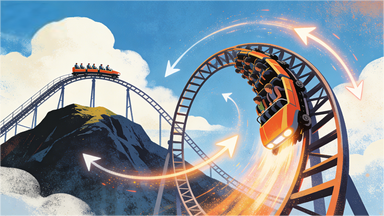
Think of it like a roller coaster: At the top of the hill, it has maximum potential energy. As it speeds down, that potential energy converts to kinetic energy. At the next hill, kinetic energy turns back into potential energy—and the cycle repeats. That’s energy transformation in action!

The Many Faces of Energy: Common Types You Encounter Daily
Energy doesn’t just come in kinetic and potential—there are countless specific forms, all of which are variations of these two basics. Here are the ones you interact with most:
1. Mechanical Energy
The sum of kinetic and potential energy in physical objects. It’s what makes things move or stay in place.
- Examples: A bicycle pedaling (kinetic + potential from the rider’s effort), a clock’s pendulum swinging, or a hammer hitting a nail.
2. Thermal (Heat) Energy
The energy of tiny particles (atoms and molecules) moving within a substance. The faster the particles move, the hotter the substance.
- Examples: Boiling water (fast-moving water molecules), sunlight warming your skin, or a campfire radiating heat.
3. Electrical Energy
The energy of moving electrons (charged particles) through a conductor (like wires). It’s the most versatile form of energy for modern life.
- Examples: Powering your phone, lighting your home, running a refrigerator, or charging an electric car.
-
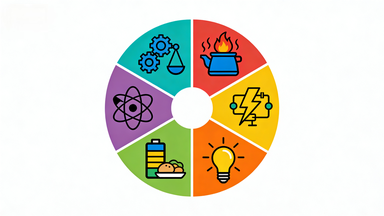
4. Chemical Energy
Stored energy in the bonds between atoms and molecules. It’s released when those bonds break (e.g., through combustion or chemical reactions).
- Examples: Food (your body breaks down its molecules to get energy), gasoline (burned in cars to create motion), batteries (chemical reactions release electrical energy), or firewood (burning releases heat and light).
5. Light (Radiant) Energy
A form of electromagnetic radiation that travels in waves. It carries energy that we can see (visible light) or feel (like infrared light, which is heat).
- Examples: Sunlight, a lightbulb, a phone screen, or even the glow of a firefly.
6. Nuclear Energy
Energy stored in the nucleus (core) of an atom. It’s released when atoms split (fission) or join together (fusion).
- Examples: Nuclear power plants (use fission to generate electricity), the sun (uses fusion to produce light and heat), or atomic bombs (fission reactions).
7. Sound Energy
Energy that travels through vibrations in air, water, or solid objects. It’s a type of mechanical energy.
- Examples: A guitar string vibrating, someone speaking, or a car horn blaring.
The Golden Rule of Energy: Conservation of Energy
One of the most important laws in physics is the Law of Conservation of Energy: Energy cannot be created or destroyed—only transformed from one form to another.
Let’s break this down with a simple example: Making toast.
- You plug in the toaster: Electrical energy flows into it.
- The toaster’s heating elements warm up: Electrical energy transforms into thermal (heat) energy.
- The toast browns: Thermal energy transforms into chemical energy (changing the bread’s molecules) and radiant (light) energy (the glow from the heating elements).
- You take a bite: Your body breaks down the toast’s molecules, converting that chemical energy into mechanical energy (to chew and move) and thermal energy (to keep your body warm).
At no point is energy "lost"—it just changes shape. Even the heat that escapes the toaster into the air isn’t wasted; it becomes thermal energy in the room. The total amount of energy in the universe stays the same forever.

Common Misconceptions About Energy
Let’s clear up a few myths that often confuse people:
Myth 1: "We’re Running Out of Energy."
False! Because energy can’t be destroyed, we’ll never "run out" of it. What we are running out of is easily accessible, non-renewable sources of energy (like oil, coal, and natural gas). These are stored chemical energy that takes millions of years to form—and once we burn them, they’re converted into heat and greenhouse gases, which are hard to turn back into usable energy.
Myth 2: "Energy and Power Are the Same Thing."
Nope! Energy is the capacity to do work; power is the rate at which energy is used or transferred. Think of it like water: Energy is the total amount of water in a bucket, and power is how fast you pour it out.
- Example: A 100-watt lightbulb uses energy faster (higher power) than a 60-watt bulb. Over an hour, the 100-watt bulb uses more energy (100 watt-hours) than the 60-watt one (60 watt-hours).
Myth 3: "Static Electricity Is a Different Kind of Energy."
Static electricity is just a form of electrical energy—stored charge (potential energy) that builds up on an object (like when you rub a balloon on your hair). When it discharges (a spark), that potential energy converts to kinetic energy (moving electrons) and light/heat energy.
Myth 4: "Plants ‘Create’ Energy From Sunlight."
Plants don’t create energy—they convert it! Through photosynthesis, plants take light energy from the sun, carbon dioxide from the air, and water from the soil, and convert it into chemical energy (glucose, their food). That’s energy transformation, not creation.
Why Energy Matters (For You and the Planet)
Energy is the foundation of modern civilization. It powers our homes, hospitals, schools, and transportation. It enables technology (from smartphones to space shuttles) and healthcare (from MRI machines to life support systems). Without energy, life as we know it would stop.
But our relationship with energy is changing. For decades, we relied on fossil fuels (oil, coal, gas)—cheap, abundant, but harmful. Burning them releases carbon dioxide, which warms the planet and causes climate change. Today, we’re shifting to renewable energy sources—sunlight, wind, water, and geothermal—that are infinite (or replenish quickly) and emit little to no greenhouse gases.
Understanding "what is energy" helps us make smarter choices:
- Choosing a solar-powered charger instead of one that uses grid electricity (which may come from coal).
- Driving an electric car (powered by electrical energy, which can come from wind or solar) instead of a gas car (powered by fossil fuels).
- Turning off lights when you leave a room (reducing the amount of electrical energy we need to generate).
Energy isn’t just a scientific concept—it’s a choice. And those choices will shape the future of our planet.

Final Thoughts: Energy Is Everywhere, and Everything
So, what is energy? It’s the invisible thread that weaves through every moment of life—the push of the wind, the warmth of the sun, the buzz of your phone, the beat of your heart. It’s the capacity to change, to move, to create, and to sustain.
We don’t just use energy—we are energy. Your body is a walking energy converter, turning food into motion, heat, and thought. The world around you is a constant dance of energy transformation, from the smallest atom to the largest storm.
Do you have questions? Want to learn more about renewable energy, how to save energy at home, or the science behind energy transformation? Drop a comment below—I’d love to dive deeper with you!
solar energy cost
solar battery
Related Article
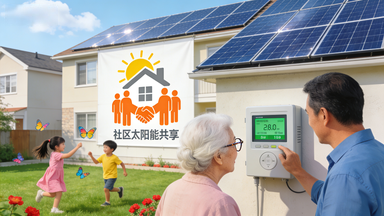
In an era where climate change urgency and energy security concerns dominate global conversations, the shift to renewable energy has moved from a "nice-to-have" to a necessity.
green mountain energy
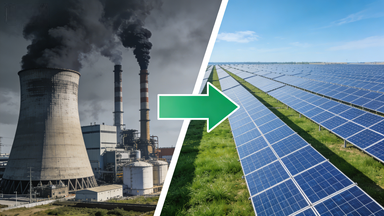
As the global community grapples with climate change, energy security, and rising fossil fuel costs, solar energy has emerged as a beacon of hope in the transition to a cleaner, more sustainable energy system.
pros of solar energy